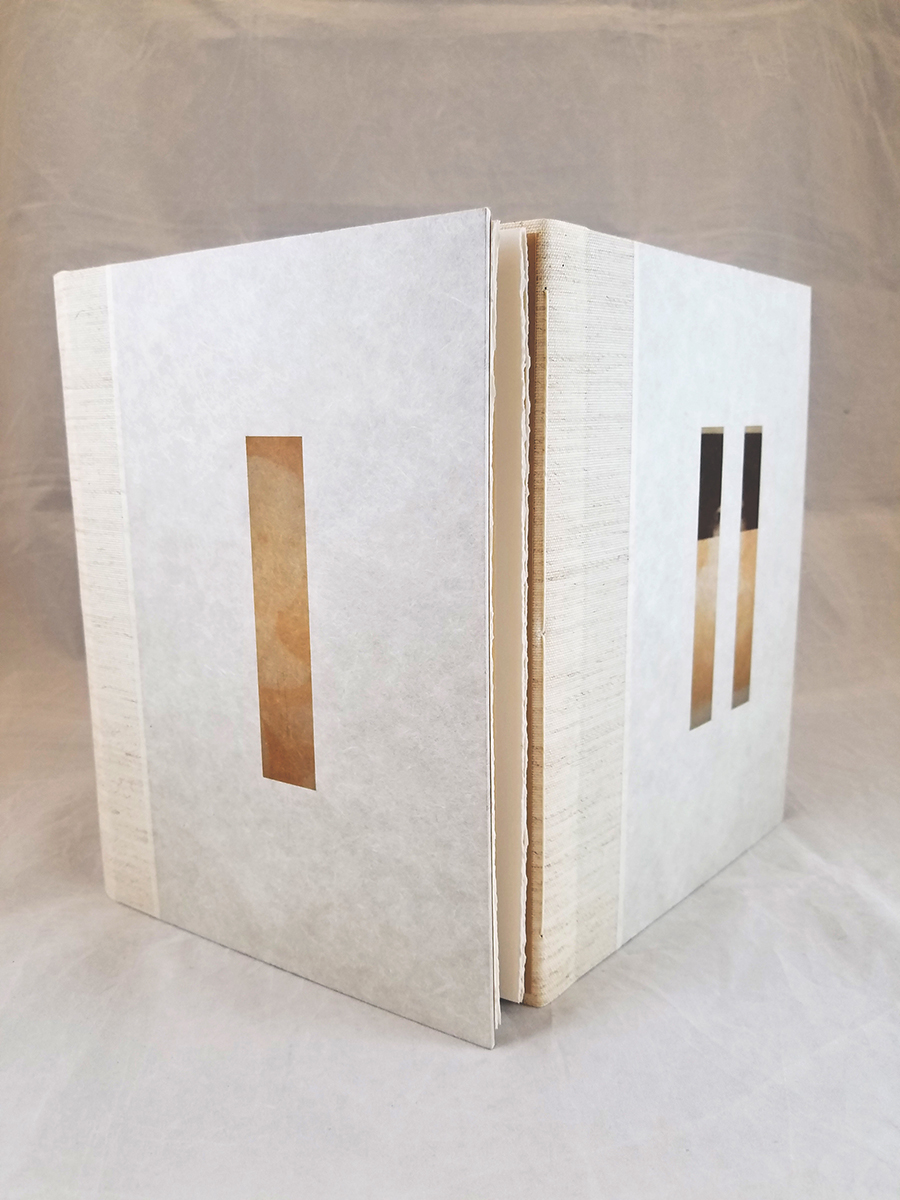
I have been obsessed with books and other printed matter for as long as I can remember — starting with picture books as an early reader, to baseball cards, to surfing magazines, to any book I could lay my hands on as I grew up. When I learned that you could make books by hand and that there was an art form called artists’ books, my life was changed. Before, I focused primarily on writing as my creative practice. After learning about artists’ books, I began to add visual art techniques to my practice, including printmaking, calligraphy, photography, collage, and assemblage. I got a job as a book repair technician in the libraries at UNC-Chapel Hill in order to develop my bookbinding craft skills. After seven years of full-time benchwork I transferred to UNC’s Art Library, where I worked closely with their collection of artists’ books and zines. During 25 years of employment in the UNC libraries, I maintained a studio practice on the side producing artists’ books, zines, visual poetry, and handmade blank books under the press name Blue Bluer Books. In 2025, I left my library career to focus full-time on studio work, research, and teaching, which I currently do out of my home studio in Pittsboro. (I’m considering getting separate studio space to teach out of, but have not yet as of October 2026.)
Our lifetime has been the most interesting, vital period in the history of the book since Gutenberg’s time. Digital technologies are often viewed as a bane to books and print, but they have actually made it easier than ever for individual artists to make printed work. Starting with the desktop publishing revolution made possible by home computers in the 1990s to the present availability of professional-grade home printers, printing presses, and commercial print-on-demand services, there has been a renaissance of interest in book arts. Younger readers, writers, and artists tired of digital everything and too much screen time have turned to making zines as a way of reconnecting with the analog world. I believe that during the digital age, books and other printed matter have been relieved of the burden of bearing all of our information. Instead, we have been learning what they do uniquely well, and finding new ways to value them. It’s a joy to make such work at this time, to share it, and to teach others who are curious about learning about book arts themselves.
Gallery